




Last updated: 7 October 2025

The bridge and culvert are two distinct structures that serve a similar purpose in civil engineering. Although they are often used interchangeably by the general public, it’s important for civil engineers to understand the differences between them. In this document, we will explore the unique characteristics and functions of bridges and culverts, highlighting the crucial role each one plays in infrastructure development.
Bridge: –
The bridge is an engineering structure built to connect the other end of the way without altering the physical obstacle offered by nature. The bridge may be constructed for pedestrian or vehicular usage only, or sometimes both type of users is incorporated.
Also, read: Types of Bridges based on Superstructure.

Culvert: –
A culvert is a structure that channels subterranean water without obstructing the natural flow. It is usually a tunnel-like structure that allows the flow of water. Culverts prevent waterlogging, flooding, and erosion, allowing water to flow through its natural course under a roadway or railway
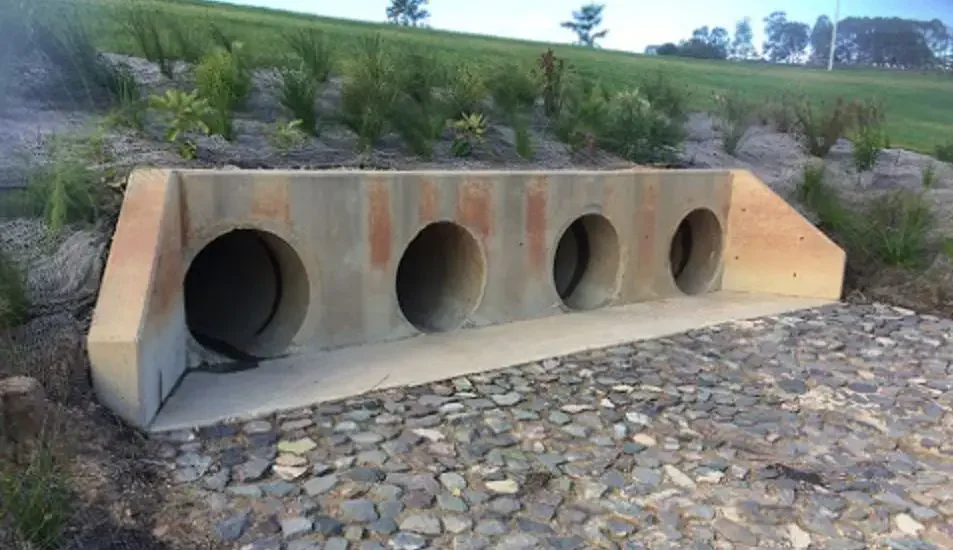
Also, read: Types of Culvert
Difference Between Bridge and Culvert:
The comparison between two important civil engineering structures is laid out in a tabulated format.
| Sl.No. | Criteria | Bridge | Culvert |
|---|---|---|---|
| 1. | A bridge is a passage of transportation over a larger water body or physical obstruction. | A culvert is generally a tunnel-like structure that permits water to pass under a roadway or railway. | |
| 2. | The basic components of a bridge are superstructure, substructure and deck. | The components of a culvert are comparatively simpler and include concrete boxes or cells, pipe, a top deck or slab and supporting parts. | |
| 3. | Height / Vertical Clearance | Generally, more than 6 meters from the lowest point (bed level or ground) to the bridge deck. Bridges are designed to provide enough clearance for large water flows, ships, trains, or vehicles beneath. | Generally, more than 6 meters from the lowest point (bed level or ground) to the bridge deck. Bridges are designed to provide enough clearance for large water flows, ships, trains, or vehicles beneath. |
| 4. | Span/Length | The span of the bridge ranges from 6 m to 120 m. | The length of the culvert is not more than 6 m. |
| 5. | The supporting structures of bridges are piers and abutments. | Culverts are usually embedded in the soil. The soil bears the major portion of the culvert load. | |
| 6. | The structure and design of a bridge are complex | The construction of a culvert requires a low budget. | |
| 7. | A bridge has no floor. | A culvert is an enveloping structure consisting of two sides, a roof and a floor. | |
| 8. | Bridges are constructed at the site or pre-constructed in smaller parts. | Culverts can be pre-constructed or built at the site. | |
| 9. | Bridge construction requires a lot of time and manpower. | Construction of culverts requires less time and labour | |
| 10. | It provides an easier route of transportation that saves time and reduces distance. | Some culverts are unsuitable for high-velocity vehicles that have sharp corners, like box culverts. | |
| 11. | It is built over a body of water that is large and has variable flow. | It is constructed when water needs to be conveyed through tunnels or channels under a roadway. | |
| 12. | Bridges can resist heavy and speeding vehicles. | Culvert is provided for the easy flow of water through its natural course. Also, provide easy transportation. | |
| 13. | A culvert is provided for the easy flow of water through its natural course. Also, provide easy transportation. | The bridge provides an easy route for transportation, which saves time and shortens the distance. |
Also, read: Types of Bridge Bearings and Their Function
In Summary:
The Bridge is a Large structure with longer spans, opening like rivers or roads, whereas a culvert is a small structure that allows water or drainage under roads or railways
FAQs:
Q: What is the difference between a bridge and a culvert?
Ans: The main differences between bridges and culverts are: –
1. The bridge is constructed over larger water bodies to ease and shorten the transportation duration. Whereas, the culvert is built over a smaller water body (such as a drain, natural gully, stream, etc.), which allows the flow of water through its natural course.
2. The bridge is constructed over a greater height (20ft,) whereas the culvert is constructed at less than 20ft.
3. The bridge spans from 6m to 20m in length. However, the length of the culvert is less than 6m.
Q: What are the types of bridges?
Ans: There are six types of bridge forms, and they are: –
1. The beam bridge,
2. The truss bridge,
3. The arch bridge,
4. The suspension bridge,
5. The cantilever bridge and
6. The cable-stay bridge.