

Last updated: 3 May 2026

Introduction
Choosing between AAC blocks and Fly Ash bricks, which are widely used in masonry in construction, is a common challenge in modern building projects. Both materials significantly influence the cost, strength, and long-term performance of a structure. These materials are part of modern developments in Concrete Technology, which focuses on improving the efficiency and performance of construction materials. AAC blocks are known for their lightweight nature and excellent thermal insulation, aligning with the principles of lightweight concrete. In contrast, Fly Ash bricks offer higher strength and better load-bearing capacity, making them suitable for structural applications.
This article provides a detailed comparison of AAC vs Fly Ash blocks, covering properties, cost, advantages, disadvantages, and practical applications to help you select the most suitable material for your project.
Quick Answer: AAC blocks are best for lightweight and well-insulated structures, while Fly Ash blocks are preferred for strength and cost-effective construction.
AAC vs Fly Ash Blocks (Quick Comparison Table)
The following table provides a quick comparison between AAC blocks and Fly Ash blocks based on key construction properties.
| Property | AAC Blocks | Fly Ash Blocks |
|---|---|---|
| Weight | Lightweight | Heavier |
| Strength | Moderate | Higher |
| Thermal Insulation | Excellent | Moderate |
| Cost | Higher | Lower |
| Workability | Easy to cut | Moderate |
| Durability | Good | Very good |
What are AAC Blocks?
AAC blocks are made from a mixture of cement, lime, fly ash, water, and an aerating agent that causes the mixture to rise and become a lightweight, cellular material. The blocks are then cut into various sizes and shapes and cured in an autoclave at high pressure and temperature. The resulting blocks are very lightweight, strong, and durable, with excellent thermal insulation properties. AAC blocks are also resistant to fire, pests, and rot, and are easy to handle and work on site.
For detailed specifications, manufacturing processes, and applications, refer to our complete guide on Autoclaved Aerated Concrete Blocks (AAC Blocks).

What are Fly Ash Blocks?
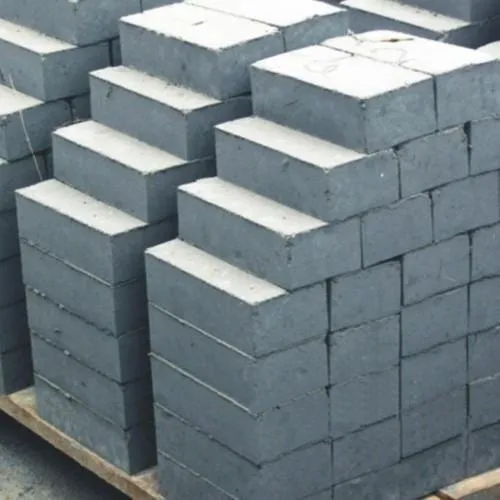
Fly Ash blocks, on the other hand, are made primarily from fly ash, a byproduct of burning coal in power plants, and a small amount of cement and water. The mixture is then poured into moulds and allowed to cure for several days. Fly Ash blocks are lighter than conventional concrete blocks, have better insulation properties, and are more environmentally friendly as they use waste materials that would otherwise go to landfills. They also have good fire resistance and are easy to work with.
AAC Blocks vs Fly Ash Bricks
AAC blocks are often compared with fly ash bricks, as both are used as alternatives to traditional clay bricks in modern masonry construction. However, AAC blocks are larger, lighter, and provide better thermal insulation, while fly ash bricks are smaller, denser, and offer higher compressive strength. The choice depends on construction type, cost, and performance requirements.
| Sl. No. | Point of Comparison | AAC Blocks | Fly Ash Blocks |
|---|---|---|---|
| 1 | Raw Materials | Available as blocks, lintel blocks, U-blocks, and corner units | Made from fly ash, cement, sand, lime, and gypsum |
| 2 | Compressive Strength | 3–7 N/mm² (non-load-bearing), 5–10 N/mm² (load-bearing) | 3.5–10 N/mm² |
| 3 | Standard Sizes | 600 × 200 × 75–150 mm | 400 × 200 × 100–200 mm |
| 4 | Shape & Types | Available as blocks, lintel blocks, U-blocks, corner units | Available as solid, hollow, lintel, and corner blocks |
| 5 | Water Absorption | 5–10% (lower) | 10–20% (higher) |
| 6 | Thermal Conductivity | 0.21–0.42 W/mK (better insulation) | 0.3–0.4 W/mK |
| 7 | Sound Insulation | 40–45 dB (200 mm thick wall) | 37–39 dB (100 mm thick wall) |
| 8 | Termite Resistance | Inorganic and insect-resistant | Inorganic and insect-resistant |
| 9 | Uses | Suitable for walls, partitions, and lightweight structures | Suitable for masonry work similar to clay bricks |
| 10 | Cost | Higher unit cost, but lower overall masonry cost | Lower unit cost, but higher overall masonry cost |
★ Key Insight: AAC blocks are significantly lighter and provide better thermal insulation due to their porous structure, while Fly Ash blocks offer higher compressive strength and are more suitable for load-bearing applications.

For a detailed explanation, read our complete guide on AAC blocks and concrete technology.
Which is Better for Construction?
The choice between AAC blocks and Fly Ash blocks depends on the specific requirements of your project, such as structural load, budget, and thermal performance. Both materials perform well in different conditions, so selecting the right one is based on application rather than a one-size-fits-all answer.
Use AAC Blocks When:
- Faster construction and easy workability are needed
- Lightweight construction is required (reduces dead load)
- Thermal insulation is important (energy-efficient buildings)
- High-rise or framed structures are involved
★ Key Takeaway: AAC blocks are ideal for modern construction where weight reduction and insulation performance are key priorities.
Use Fly Ash Blocks When:
- Higher compressive strength is required
- Load-bearing walls are involved
- Budget is a major concern
- Traditional masonry performance is preferred
★ Key Takeaway: Fly Ash blocks are suitable for projects where strength, durability, and cost-effectiveness are the main focus.
AAC vs Fly Ash Blocks Cost Comparison
| Cost Factor | AAC Blocks | Fly Ash Blocks |
|---|---|---|
| Unit Cost | Higher | Lower |
| Mortar Consumption | Less | More |
| Labour Cost | Lower | Moderate |
| Overall Cost | Moderate | Economical |
Recommended Reading: Stabilized Mud Block: Properties, Advantages & Usage
Frequently Asked Questions
Q: Are AAC blocks stronger than Fly Ash blocks?
Answer: No, Fly Ash blocks generally have higher compressive strength than AAC blocks, making them more suitable for load-bearing applications..
Q: Which is cheaper, AAC or Fly Ash blocks?
Answer: Fly Ash blocks are cheaper per unit. However, AAC blocks may reduce overall construction cost due to lower mortar usage and faster installation.
Q: Which block provides better thermal insulation?
Answer: AAC blocks provide better thermal insulation due to their porous structure and air voids.
Q: Are AAC blocks good for load-bearing walls?
Answer: Yes, AAC blocks can be used for load-bearing walls, but their strength is lower than Fly Ash blocks, so proper design considerations are required.
Q: Which block is better for house construction?
Answer: AAC blocks are better for modern houses due to their lightweight nature and insulation properties, while Fly Ash blocks are suitable for traditional and load-bearing structures.
Q: Are Fly Ash blocks environmentally friendly?
Answer: Yes, Fly Ash blocks are eco-friendly as they utilize industrial waste (fly ash) and reduce the use of natural clay.
Final Verdict:
There is no universally “better” option, as AAC blocks are better for lightweight and insulated structures, while Fly Ash blocks are better for strength and economical construction. The right choice depends on your project’s structural and performance requirements.
References & Standards
- ASTM International. (2017). ASTM C1693: Standard specification for autoclaved aerated concrete (AAC) masonry units. ASTM.
- ASTM International. (2019). ASTM C62: Standard specification for building brick (solid masonry units). ASTM.
- Bureau of Indian Standards. (1984). IS 2185 (Part 3): Autoclaved cellular (aerated) concrete blocks. BIS.
- Bureau of Indian Standards. (2002). IS 12894: Pulverized fuel ash–lime bricks—Specification. BIS.
- Bureau of Indian Standards. (2000). IS 456: Plain and reinforced concrete—Code of practice. BIS.
- Mehta, P. K., & Monteiro, P. J. M. (2014). Concrete: Microstructure, properties, and materials (4th ed.). McGraw-Hill Education.
- Neville, A. M. (2011). Properties of concrete (5th ed.). Pearson.


