
Last updated: 20 September 2026

Introduction
Concrete is one of the most widely used construction materials in the world. From small residential houses to mega bridges, dams, tunnels, skyscrapers, highways, and airports, concrete plays a vital role in modern infrastructure. Its popularity comes from its strength, durability, versatility, fire resistance, and ability to be moulded into almost any shape.
Concrete technology is the branch of civil engineering that deals with the study of concrete materials, mix design, production, placement, curing, testing, performance, and innovations. Understanding concrete technology helps engineers, contractors, and students produce stronger, more durable, and cost-effective concrete structures.
In this complete guide, we cover the history, ingredients, types, grades, tests, applications, modern innovations, and future of concrete.
What is Concrete Technology?
Concrete technology is the branch of civil engineering that deals with the study of concrete materials, mix design, production, placement, curing, testing, and long-term performance. It involves understanding how ingredients such as cement, water, aggregates, and admixtures interact to produce concrete with the required strength, durability, and workability. Concrete technology helps engineers and builders construct safe, economical, and durable structures such as buildings, bridges, roads, dams, and other infrastructure. Concrete technology mainly focuses on:
- Selection of materials
- Mix proportioning
- Workability and consistency
- Strength development
- Durability performance
- Quality control and testing
- Placement and compaction methods
- Curing practices
- Repair and maintenance
- Sustainable concrete solutions
★ Important Note: In simple words, concrete technology ensures that concrete performs well during construction and throughout its service life.
Brief History of Concrete
Concrete has a long history dating back thousands of years.
Ancient Times
- Early forms of lime-based concrete were used by the Egyptians and the Romans.
- Romans used volcanic ash (pozzolana), lime, and aggregates to build durable structures.
- Famous Roman concrete structures include the Pantheon and aqueducts.
Modern Era
- In 1824, Joseph Aspdin patented Portland cement.
- Reinforced concrete became popular in the 19th and 20th centuries.
- Prestressed concrete revolutionised long-span structures.
Present Day
Today, concrete is used in almost every construction project, from houses to smart cities.
Main Ingredients of Concrete
Concrete is made by mixing cement, water, aggregates, and sometimes admixtures.
1. Cement
Cement is the main binding material used in most cement concrete mixes. When mixed with water, it hydrates and binds aggregates into a solid mass. Different cement types are selected depending on strength and durability requirements.
- Ordinary Portland Cement (OPC)
- Portland Pozzolana Cement (PPC)
- Portland Slag Cement (PSC)
- Rapid Hardening Cement
- Sulphate Resistant Cement
★ Important Note: There are other types of cement used in construction which you may also like to read under Types of Cement
2. Fine Aggregate
Fine aggregate is one of the essential materials used in concrete technology and usually consists of natural sand or manufactured sand (M-sand) passing through a 4.75 mm sieve. It fills the voids between coarse aggregate particles, improves workability, reduces segregation, and helps produce a dense and durable concrete mix. Proper grading, cleanliness, and particle shape of fine aggregate are important for achieving good strength and finish in concrete.
Read more in our detailed guide on Fine Aggregate for Concrete.
3. Coarse Aggregate
Coarse aggregate is an important component of concrete technology, consisting of crushed stone, gravel, or other hard particles generally retained on a 4.75 mm sieve. It provides bulk volume, strength, stability, and load-carrying capacity to concrete while helping reduce shrinkage and cement consumption. The size, grading, shape, and cleanliness of coarse aggregate significantly influence the workability, strength, and durability of concrete structures.
4. Water
Water is a vital ingredient in concrete technology as it reacts with cement to start the hydration process and helps bind the materials into a hardened mass. It also provides the required workability for mixing, placing, and compaction of concrete. Clean and potable water is generally preferred, as impurities in water may affect the setting time, strength, and durability of concrete.
5. Admixtures
Admixtures are materials added to concrete before or during mixing to improve specific properties such as workability, setting time, strength, durability, and resistance to environmental conditions. They may be chemical or mineral-based, including plasticisers, superplasticisers, accelerators, retarders, fly ash, and silica fume. Admixtures play an important role in modern concrete technology by enhancing performance and construction efficiency. Read more in our detailed guide on Concrete Admixtures.

Difference Between Concrete and Mortar
| Aspect | Concrete | Mortar |
|---|---|---|
| Composition | Cement + sand + coarse aggregate + water | Cement + sand + water |
| Coarse Aggregate | Present | Usually absent |
| Strength | Higher | Lower |
| Uses | Structural members, slabs, foundations | Brick/block masonry, plastering |
| Load Carrying | Yes | Limited |
Recommended Reading: Masonry in Construction: Types, Materials, Techniques, and Applications (Complete Guide)
How Concrete Works
When cement mixes with water, a chemical reaction called hydration occurs. This reaction forms a hardened paste that binds aggregates together into a solid mass.
Concrete gains strength over time:
- Initial setting: a few hours
- 7-day strength: early strength
- 28-day strength: standard design strength
- Continued strength gain for months or years
Important Properties of Concrete
Fresh Concrete Properties
- Workability: The ease with which fresh concrete can be mixed, placed, compacted, and finished without segregation. Drive more into the factors affecting workability.
- Consistency: The degree of wetness or fluidity of fresh concrete, indicating how easily it flows.
- Segregation Resistance: The ability of concrete to remain uniform without separation of cement paste and aggregates during handling or placing.
- Bleeding Resistance: The ability of concrete to prevent excess water from rising to the surface after placing. Read more in our detailed guide on Bleeding in Concrete.
- Finishability: The property of fresh concrete that indicates how easily its surface can be levelled, floated, trowelled, and finished, and is influenced by mix design, water-cement ratio, aggregate grading, and sand proportion.
Hardened Concrete Properties
- Compressive strength
- Tensile strength
- Flexural strength
- Durability
- Density
- Shrinkage
- Creep
- Permeability
- Fire resistance
Types of Concrete
Concrete can be classified in many ways.

Based on Binding Material
Cement Concrete
Cement concrete generally refers to concrete made using Portland Cement as the binding material with fine and coarse aggregates. It includes plain cement concrete (PCC) and reinforced cement concrete (RCC), making it the most common construction material worldwide. Read more in our detailed guide on Cement Concrete.
Cement-Concrete can be further classified into the following types:
- Plain Cement Concrete (PCC)
- Reinforced Cement Concrete (RCC)
- Prestressed Concrete
Lime Concrete
Lime concrete is a traditional form of concrete where lime is used as the binder instead of cement. It was widely used in old foundations, roofs, and heritage structures, and is still used in restoration and sustainable construction works. Read our complete guide on Lime Concrete.
Asphalt Concrete
Asphalt concrete is a composite material made by mixing aggregates such as crushed stone, sand, and filler with bitumen (asphalt) as the binding material. It is widely used in road construction, highways, airport runways, parking areas, and pavements because of its flexibility, smooth riding surface, and quick construction. Asphalt concrete offers good durability, skid resistance, and ease of maintenance, making it one of the most common paving materials in transportation engineering.
Based on Reinforcement
Concrete can be classified based on the presence and type of reinforcement used to improve its structural performance, especially tensile strength and crack resistance. Since plain concrete is strong in compression but weak in tension, reinforcement materials such as steel bars, welded mesh, prestressing tendons, or fibres are added according to design requirements. Based on reinforcement, concrete is commonly divided into Plain Cement Concrete (PCC), Reinforced Cement Concrete (RCC), Prestressed Concrete, and Fibre Reinforced Concrete (FRC).
Plain Cement Concrete (PCC)
Plain Cement Concrete (PCC) is concrete without any steel reinforcement and is mainly used where high tensile strength is not required. Also known as lean concrete. Such types of concrete are used for:
- Flooring base
- Levelling course
- Pavements
- Foundations under RCC
Reinforced Cement Concrete (RCC)
Reinforced Cement Concrete (RCC) is concrete in which steel bars, mesh, or reinforcement are embedded to resist tensile and shear stresses. It is widely used for structural elements such as:
- Beams
- Slabs
- Columns
- Footings
- Retaining walls
Prestressed Concrete
Prestressed concrete is a type of concrete in which internal compressive stresses are intentionally introduced by tensioning high-strength steel tendons either before or after the concrete is cast. This method enhances the structural performance of concrete by improving its resistance to tensile stresses and cracking. Prestressed concrete is commonly used for heavy structural elements and long-span structures that require greater load-carrying capacity and durability. Some of the heavy structural elements are:
- Bridges
- Long-span roofs
- Sleepers
- Flyovers
Based on Density
Normal Weight Concrete
Most common structural concrete.
Lightweight Concrete
Uses lightweight aggregates. Suitable for thermal insulation and reduced dead load.
Heavyweight Concrete
Uses dense aggregates for radiation shielding.
Used in hospitals and nuclear plants.
Based on Production Method
Ready Mix Concrete (RMC)
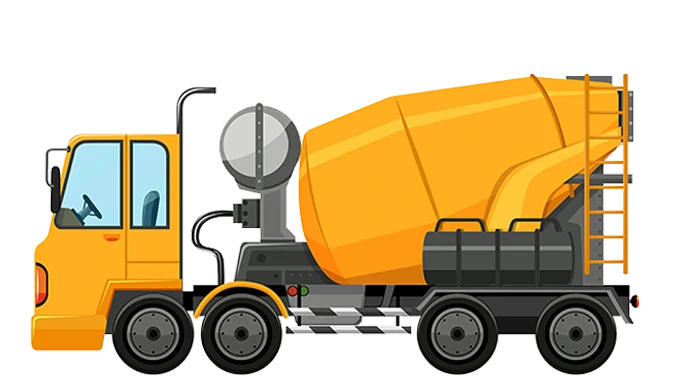
Ready Mix Concrete (RMC) is concrete manufactured in a batching plant under controlled conditions and delivered to the construction site in transit mixers in a freshly mixed or agitated state. It provides consistent quality, accurate mix proportions, faster construction, reduced material wastage, and lower on-site labour requirements. Ready mix concrete is widely used in residential buildings, commercial projects, roads, bridges, and large infrastructure works where quality control and speed of construction are important. Read our complete guide on Ready Mix Concrete (RMC).

Site Mixed Concrete
Prepared manually or using mixers at the construction site.
Precast Concrete
Concrete elements are cast in a factory and installed at the site.
Examples:
- Pipes
- Panels
- Sleepers
- Kerbs
Special Concrete Types
Self-Compacting Concrete (SCC)
Self-Compacting Concrete (SCC) is a highly flowable concrete that can spread, fill formwork, and pass through congested reinforcement under its own weight without the need for mechanical vibration. It is produced using a balanced mix of fine materials, superplasticisers, and viscosity-modifying admixtures to achieve excellent workability and stability. SCC provides smooth surface finish, faster placement, reduced noise during construction, and improved compaction quality. It is widely used in heavily reinforced members, precast elements, complex formwork, bridges, and high-quality architectural concrete works.
Fibre Reinforced Concrete (FRC)
Fibre Reinforced Concrete (FRC) is a special type of concrete in which small fibres such as steel, glass, polypropylene, or synthetic fibres are added to the mix to improve tensile strength, crack resistance, toughness, and durability. Cementitious materials act as the binding matrix, while coarse aggregate may or may not be included depending on the mix design and application. Read more in our detailed guide on Fibre Reinforced Concrete (FRC).
Polymer Concrete
Polymer concrete is a type of concrete in which polymer resin is used as the binding material, either fully or partially, instead of cement. It provides high early strength, strong adhesion, low permeability, and excellent resistance to chemicals and corrosion. Polymer concrete is widely used in repair works, industrial floors, drainage channels, precast units, and chemical plants.
High Strength Concrete (HSC)
High Strength Concrete (HSC) is concrete with compressive strength significantly higher than normal structural concrete, typically used where high load-carrying capacity is required. It is produced using a low water-cement ratio, quality aggregates, and chemical admixtures. HSC is commonly used in high-rise buildings, bridges, heavy foundations, and columns where smaller member sizes and greater structural efficiency are desired.
High Performance Concrete (HPC)
High Performance Concrete (HPC) is specially engineered concrete designed to provide superior strength, durability, workability, and long-term performance compared with conventional concrete. It is produced using high-quality materials, a low water-cement ratio, mineral admixtures such as silica fume or fly ash, and chemical admixtures like superplasticisers. HPC is commonly used in bridges, marine structures, high-rise buildings, tunnels, and structures exposed to harsh environmental conditions where enhanced durability and reduced maintenance are important.
Shotcrete
Shotcrete is concrete or mortar conveyed through a hose and pneumatically projected at high velocity onto a surface. It is widely used for tunnel linings, retaining walls, slope stabilisation, swimming pools, repair works, and underground construction. Shotcrete can be applied using dry-mix or wet-mix methods and is valued for fast placement and strong adhesion. Read our complete guide on Shotcrete.

Geopolymer Concrete
Geopolymer concrete is an eco-friendly alternative to conventional cement concrete in which industrial by-products such as fly ash or ground granulated blast furnace slag (GGBS) are used as the primary binder instead of Portland cement. It offers good strength, excellent chemical resistance, lower carbon emissions, and improved durability. Geopolymer concrete is increasingly used in sustainable construction, precast products, pavements, and industrial structures.
Mass Concrete
Mass concrete refers to large volumes of concrete placed in massive structural elements where the heat generated during cement hydration becomes an important concern. It is commonly used in dams, raft foundations, thick retaining walls, bridge piers, and heavy machine foundations. Proper temperature control, low-heat cement, and staged pouring are often required to prevent thermal cracking. Read more in our detailed guide on Mass Concrete.
Plum Concrete
Plum concrete is a type of concrete in which large stones or boulders (called plum stones) are embedded in plain cement concrete to reduce cement consumption and increase economy. It is commonly used in foundations, retaining wall bases, trench filling, and levelling works where structural reinforcement is not required. Read the complete guide on Plum Concrete.
Vacuum Concrete
Vacuum concrete is concrete from which excess water is removed immediately after placing by applying vacuum pressure through special mats and pumps. This process increases density, improves early strength, reduces shrinkage, and enhances surface durability. Vacuum concrete is commonly used for industrial floors, road slabs, airport pavements, and areas requiring faster construction progress.
Roller Compacted Concrete
Roller Compacted Concrete (RCC) is a low-slump, stiff concrete placed using paving equipment and compacted with vibratory rollers instead of conventional vibration methods. It allows rapid construction, low cost, and high durability. Roller-compacted concrete is commonly used in dams, heavy-duty pavements, industrial yards, ports, and large infrastructure projects.
3D Printed Concrete
3D Printed Concrete is an advanced construction material placed layer by layer using automated robotic printers controlled by digital design models. Instead of traditional formwork, the concrete is extruded in planned shapes to create walls, structural components, and architectural elements with high precision. It helps reduce labour, material waste, and construction time while allowing complex designs that are difficult with conventional methods. 3D printed concrete is increasingly used for houses, modular buildings, precast elements, and innovative infrastructure projects.
Green Concrete
Green concrete is an environmentally friendly type of concrete produced using sustainable materials and methods to reduce the environmental impact of conventional concrete. It often incorporates recycled aggregates, industrial by-products such as fly ash, slag, or silica fume, and optimised mix designs that lower cement consumption and carbon emissions. Green concrete offers good strength and durability while promoting resource conservation, waste reduction, and sustainable construction practices.
Concrete Grades
Concrete grade indicates compressive strength after 28 days.
Common nominal and design grades:
| Grade | Characteristic Strength |
|---|---|
| M5 | 5 MPa |
| M7.5 | 7.5 MPa |
| M10 | 10 MPa |
| M15 | 15 MPa |
| M20 | 20 MPa |
| M25 | 25 MPa |
| M30 | 30 MPa |
| M35 | 35 MPa |
| M40 | 40 MPa |
| M50+ | High strength grades |
Typical Uses
- M10–M15: PCC works
- M20: Residential RCC works
- M25–M30: Buildings and slabs
- M35–M40: Heavy structures
- M50+: Bridges and high-rise buildings
Concrete Mix Design
Mix design means selecting suitable proportions of:
- Cement
- Water
- Fine aggregate
- Coarse aggregate
- Admixtures
Goals of mix design:
- Required strength
- Durability
- Workability
- Economy
Common methods:
- Nominal mix (small works)
- Design mix (engineered projects)
Water-Cement Ratio
Water-cement ratio is one of the most important factors affecting strength and durability.
Lower ratio generally gives higher strength if workable concrete is maintained.
Typical range:
- 0.35 to 0.55 depending on application
Excess water can cause:
- Lower strength
- Cracking
- Bleeding
- High permeability
Concrete Production Process
1. Batching
Measurement of materials by weight or volume.
2. Mixing
Uniform blending in a mixer or a batching plant.
3. Transporting
Using a wheelbarrow, dumper, pump, transit mixer, or crane bucket.
4. Placing
Concrete is placed near the final position without segregation.
5. Compaction
Usually done with vibrators to remove air voids.
6. Finishing
Surface levelling and trowelling.
7. Curing
Keeping concrete moist for proper hydration.
Methods:
- Water curing
- Ponding
- Wet coverings
- Membrane curing
- Steam curing
Concrete Tests
Concrete technology uses various tests to evaluate the workability, strength, durability, and overall quality of concrete in fresh and hardened states. These tests help ensure concrete meets design and construction requirements.
Fresh Concrete Tests
| Concrete Test | Purpose |
|---|---|
| Slump Test | Measures workability and consistency of fresh concrete. Read our complete guide on the Slump Test. |
| Compaction Factor Test | Used for low-workability mixes. |
| Flow Table Test | Used for high-workability concrete. |
| Air Content Test | Measures entrained air in fresh concrete. |
Hardened Concrete Tests
| Concrete Test | Purpose |
|---|---|
| Compression Test | Determines compressive strength of hardened concrete. Read more on Compression Test. |
| Split Tensile Test | Measures tensile strength |
| Flexural Test | Measures bending strength |
| Rebound Hammer Test | Non-destructive test used to estimate surface hardness and strength. Read our guide on Rebound Hammer Test. |
| Ultrasonic Pulse Velocity (UPV) Test | Used to assess internal quality, cracks, and voids. Read more on UPV Test. |
★ For a complete overview, see our detailed article on Tests Conducted on Concrete.
Durability of Concrete
Durability means the ability to resist weathering, chemical attack, abrasion, and ageing.
Factors affecting durability:
- Low water-cement ratio
- Proper cover to reinforcement
- Good compaction
- Adequate curing
- Quality materials
- Proper drainage
- Use of admixtures
Common durability problems:
- Corrosion of steel
- Sulphate attack
- Alkali-aggregate reaction
- Freeze-thaw damage
- Carbonation
- Cracking
Uses of Concrete in Construction
Concrete is one of the most versatile construction materials and is used in almost every type of infrastructure project due to its strength, durability, and adaptability. With the support of concrete technology, it can be designed for different structural, architectural, and environmental requirements. Concrete is widely used in buildings, roads, bridges, dams, tunnels, water-retaining structures, industrial floors, pavements, and many other civil engineering works.
Buildings
- Foundations
- Columns
- Beams
- Slabs
- Staircases
Transportation
- Roads
- Bridges
- Airports
- Rail sleepers
Water Structures
- Dams
- Canals
- Tanks
- Sewage plants
Infrastructure
- Tunnels
- Retaining walls
- Towers
- Ports
Residential Works
- Driveways
- Boundary walls
- Flooring
- Pathways
Modern Applications of Concrete
Concrete is no longer limited to traditional buildings, roads, and foundations, as modern construction demands stronger, smarter, and more efficient materials. Advances in concrete technology have led to innovative applications that improve structural performance, construction speed, durability, and sustainability. Today, concrete is widely used in high-rise buildings, smart infrastructure, decorative finishes, 3D printing, pervious pavements, and other advanced engineering projects.
High-Rise Buildings
Concrete technology plays a major role in the construction of modern high-rise buildings by providing high-strength, durable, and workable concrete suitable for tall structures. Advanced concrete mixes help reduce column sizes, improve load-carrying capacity, enhance fire resistance, and increase overall structural efficiency. With the use of concrete technology, skyscrapers and multi-storey buildings can be constructed safely, economically, and with a longer service life.
Smart Concrete
Smart concrete is an advanced product of concrete technology designed to monitor the condition and performance of structures in real time. It may contain sensors or conductive materials that can detect stress, strain, cracks, temperature changes, and moisture levels within the concrete. By using smart concrete technology, engineers can improve structural health monitoring, reduce maintenance costs, and enhance the safety and durability of bridges, buildings, tunnels, and other infrastructure.
3D Printed Concrete
3D printed concrete is a modern advancement in concrete technology in which concrete is placed layer by layer using automated robotic printers based on digital design models. This innovative method reduces the need for traditional formwork, speeds up construction, minimises material waste, and allows complex architectural shapes. With the growth of concrete technology, 3D printed concrete is increasingly used for houses, modular buildings, precast elements, and future smart construction projects.
Decorative Concrete
Decorative concrete is a specialised application of concrete technology used to improve the appearance and finish of concrete surfaces while maintaining strength and durability. Through methods such as stamping, polishing, staining, colouring, and exposed aggregate finishes, concrete can be made visually attractive for both interior and exterior works. Decorative concrete is widely used in floors, driveways, walkways, patios, walls, and architectural projects where aesthetics and performance are equally important.
Pervious Concrete
Pervious concrete is an innovative product of concrete technology designed with interconnected voids that allow rainwater to pass through the surface into the ground below. This sustainable concrete technology helps reduce surface runoff, improve groundwater recharge, and minimise waterlogging in urban areas. Pervious concrete is widely used in parking areas, footpaths, pavements, and drainage-friendly developments where environmental performance is important. Read more in our detailed guide on Pervious Concrete.
Ultra High Performance Concrete (UHPC)
Ultra High Performance Concrete (UHPC) is an advanced development in concrete technology known for its exceptionally high strength, durability, and dense microstructure compared with conventional concrete. It is produced using fine materials, low water-binder ratio, steel fibres, and high-performance admixtures to achieve superior structural performance. UHPC is widely used in bridges, high-rise buildings, precast elements, marine structures, and other modern engineering applications where long service life and reduced maintenance are essential.
Sustainable Concrete Technology
Sustainable concrete technology focuses on reducing the environmental impact of concrete production while maintaining the required strength, durability, and performance of structures. It involves the use of eco-friendly materials, recycled resources, low-carbon binders, efficient mix designs, and innovative construction methods that minimise energy consumption and carbon emissions. As the demand for greener infrastructure continues to grow, sustainable concrete technology plays an important role in the future of modern construction.
Eco-Friendly Measures
Several eco-friendly measures are being adopted in concrete technology to reduce environmental impact and improve resource efficiency. These practices focus on lowering carbon emissions, conserving natural resources, minimising waste, and extending the service life of structures. Common sustainable approaches include:
- Use of fly ash and slag
- Recycled aggregates
- Reduced cement content
- Carbon capture technologies
- Low-carbon binders
- Efficient mix design
- Longer service life design
Green Concrete
Green concrete is an environmentally friendly concrete produced using sustainable materials and methods to reduce carbon emissions and conserve natural resources. It commonly uses recycled aggregates, fly ash, slag, and optimised mix designs while maintaining the required strength and durability.
Future of Concrete
The future of concrete is focused on improving sustainability, durability, and construction efficiency to meet the demands of modern infrastructure. As environmental concerns and technological advancements continue to grow, new forms of concrete are being developed with lower carbon emissions, higher performance, and smarter production methods. Innovations such as self-healing concrete, carbon-negative concrete, AI-based mix design, nano concrete, robotic construction, and recycled demolition concrete are expected to transform the construction industry and make concrete more sustainable, efficient, and resilient in the years ahead.
Expected Innovations
Concrete technology is rapidly evolving through research and advanced construction methods aimed at improving performance, sustainability, and efficiency. Future innovations are expected to reduce environmental impact, enhance durability, and simplify construction processes. Developments such as self-healing concrete, carbon-negative concrete, AI-based mix design, nano concrete, robotic construction, and recycled demolition concrete are likely to play a major role in shaping the next generation of smart and sustainable infrastructure.
Self-Healing Concrete
Self-healing concrete is an innovative type of concrete designed to automatically repair small cracks without manual intervention. It works by using special bacteria, capsules, or chemical agents embedded in the concrete that react with moisture and air to seal cracks when damage occurs. This technology can improve durability, reduce maintenance costs, extend service life, and enhance the long-term performance of buildings, bridges, tunnels, and other infrastructure structures.
Carbon-Negative Concrete
Carbon-negative concrete is an advanced sustainable concrete designed to absorb or store more carbon dioxide (CO₂) during its life cycle than is emitted during its production. It is developed using low-carbon binders, recycled materials, carbon capture technologies, or mineralisation processes that permanently lock CO₂ within the concrete. Carbon-negative concrete helps reduce the environmental impact of construction and is gaining attention for use in green buildings, pavements, precast products, and future low-emission infrastructure projects.
AI-Based Mix Design
AI-based mix design is the use of artificial intelligence and data-driven algorithms to optimise concrete mix proportions for strength, durability, workability, cost, and sustainability. By analysing large amounts of material and performance data, AI can quickly recommend efficient combinations of cement, aggregates, water, and admixtures based on project requirements. This modern approach helps reduce trial mixes, save materials, improve quality control, and support smarter concrete production in future construction projects.
Nano Concrete
Nano concrete is an advanced type of concrete in which nanomaterials such as nano silica, carbon nanotubes, or nano titanium dioxide are added in small quantities to improve the properties of conventional concrete. These materials enhance strength, durability, density, crack resistance, and resistance to water penetration by refining the internal microstructure of the concrete. Nano concrete is being explored for high-performance structures, durable pavements, smart buildings, and future sustainable construction applications.
Robotic Construction
Robotic construction is the use of automated machines and intelligent robotic systems to perform construction tasks such as concrete placement, bricklaying, welding, material handling, surface finishing, and 3D printing. These technologies improve speed, precision, safety, and productivity while reducing labour-intensive work and material waste. Robotic construction is becoming increasingly important in modern infrastructure projects, smart buildings, modular construction, and future automated job sites.
Recycled Demolition Concrete
Recycled demolition concrete is concrete produced using crushed concrete waste obtained from demolished buildings, pavements, and old structures as recycled aggregate in new construction. It helps reduce construction waste, conserve natural aggregate resources, and lower the environmental impact of concrete production. Recycled demolition concrete is commonly used in road sub-bases, pavements, non-structural works, backfilling, and increasingly in sustainable structural applications with proper processing and quality control.
Advantages of Concrete
Concrete is one of the most preferred construction materials because of its strength, durability, versatility, and wide availability. It can be moulded into different shapes, provides excellent compressive strength, and performs well under various environmental conditions. With proper design and curing, concrete structures can achieve a long service life with low maintenance, making concrete an economical and dependable choice for buildings, roads, bridges, dams, and other infrastructure works.
- High compressive strength
- Durable and long-lasting
- Fire resistant
- Moldable into any shape
- Widely available materials
- Economical for many works
- Low maintenance
- Suitable for mass construction
Limitations of Concrete
Although concrete is one of the most widely used and reliable construction materials, it also has certain limitations that must be considered during design and construction. Factors such as low tensile strength, heavy self-weight, shrinkage, cracking, and environmental impact can affect its performance if not properly managed. Understanding these limitations helps engineers select suitable materials, reinforcement, and construction methods for durable structures.
- Low tensile strength
- Heavy self-weight
- Shrinkage and cracking risk
- Requires curing time
- Difficult to alter after hardening
- Cement production has a carbon footprint
Why Concrete Technology is Important for Civil Engineers
Concrete failures often happen due to poor materials, bad workmanship, improper curing, or wrong mix design. Knowledge of concrete technology helps engineers ensure:
- Safety
- Economy
- Durability
- Sustainability
- Quality construction
Frequently Asked Questions
Q: What is concrete technology?
Answer: Concrete technology is the study of concrete materials, properties, mix design, production, testing, and performance.
Q: Which grade of concrete is used in houses?
Answer: M20 or M25 is commonly used for residential RCC work, depending on design.
Q: Why is curing important?
Answer: Curing maintains moisture for hydration, increasing strength and durability.
Q: What is the strongest concrete?
Answer: Ultra High Performance Concrete (UHPC) and very high-grade mixes are among the strongest commercial concretes.
Q: What is green concrete?
Answer: Concrete made using recycled materials or low-carbon binders to reduce environmental impact.
Conclusion
Concrete technology is the backbone of modern construction. From ancient Roman structures to futuristic 3D printed buildings, concrete continues to evolve. By understanding materials, grades, tests, durability, and modern innovations, engineers can produce safer, stronger, and more sustainable structures. As the world moves toward smart cities and green infrastructure, advanced concrete technology will remain essential for the future of civil engineering.
References & Standards
-
American Concrete Institute. (n.d.). ACI collection of concrete codes, specifications, and practices.
https://www.concrete.org -
ASTM International. (n.d.). ASTM standards for concrete and aggregates.
https://www.astm.org -
Bureau of Indian Standards. (2000). IS 456:2000: Plain and reinforced concrete—Code of practice.
BIS. -
Bureau of Indian Standards. (2019). IS 10262:2019: Concrete mix proportioning—Guidelines.
BIS. -
International Energy Agency. (2023). Cement and concrete technology roadmap.
https://www.iea.org -
Neville, A. M. (2011). Properties of concrete (5th ed.).
Pearson Education. -
Shetty, M. S. (2005). Concrete technology: Theory and practice (Rev. ed.).
S. Chand Publishing. -
Mehta, P. K., & Monteiro, P. J. M. (2014). Concrete: Microstructure, properties, and materials (4th ed.).
McGraw-Hill Education. -
U.S. Department of Transportation, Federal Highway Administration. (2022). Ultra-high performance concrete.
https://highways.dot.gov - United Nations Environment Programme. (2022). 2022 global status report for buildings and construction.
https://www.unep.org


