

Last updated: 4 October 2026

The modern construction industry heavily relies on bricks as the fundamental masonry units for building structures. The selection of bricks in masonry construction depends on their material, which can include clay, concrete, lime, fly ash, etc. These materials give rise to a diverse range of brick types, each crafted through distinct manufacturing techniques.
Below, you will find a comprehensive list of these brick types. The popularity of bricks as building construction materials from the earlier days to modern times is because of their ready availability, cheapness, workability and durability. The choice of specific brick types is guided by both functional and aesthetic considerations. In this article, we discuss the types of bricks used in building construction.

Brick Sizes: Actual and Nominal Dimensions
Actual dimensions are the dimensions of the brick itself. Nominal dimensions include the allowance for mortar joints used in dimensional coordination.
Bricks used in masonry can be of two types: –
Based on dimensional sizing, bricks used in masonry may be grouped into traditional and modular bricks. Traditional brick sizes vary between regions, while modular bricks follow specified dimensions for coordination with mortar joints (Punmia et al., 1993, p. 242).
- Traditional Bricks (Nonmodular size)
- Modular Bricks
Traditional Bricks
Traditional bricks are those whose size is not standardised. The dimensions of this brick vary from place to place. Punmia and his co-authors describe lengths of approximately 200–250 mm, widths of 100–130 mm and thicknesses of 50–75 mm. They also give a commonly adopted traditional size of approximately 230 × 114 × 76 mm, or 9 × 4½ × 3 inches. These are textbook examples rather than universal standard dimensions (Punmia et al., 1993., p. 242).
Modular Bricks
Modular bricks have specified dimensions that allow coordination of brickwork with mortar joints. IS 1077:1992 specifies the following actual sizes for modular common burnt clay building bricks (Bureau of Indian Standards, 1992):
| Sl.No. | Length (mm) | Width (mm) | Height (mm) |
|---|---|---|---|
| a. | 190 | 90 | 90 |
| b. | 190 | 90 | 40 |
Also, read: Comparison of Brick Masonry and Stone Masonry
Types of Bricks Based on Raw Materials
Bricks can be classified according to the principal materials used in their manufacture:
- Clay Bricks – Include sun-dried clay bricks and burnt clay bricks.
- Fly Ash Bricks – Made using fly ash with binders such as cement or lime, and other constituents.
- Concrete Bricks – Made from cement, fine and coarse aggregates, and water.
- Sand-Lime Bricks (Calcium Silicate Bricks) – Made primarily from sand and lime and hardened under steam pressure.
Clay Bricks Based on Firing
Clay bricks can be grouped into sun-dried (unburnt) and kiln-fired (burnt) bricks according to how they are hardened. This process influences their strength, durability and resistance to moisture.
1. Sun-Dried Clay Bricks
Sun-dried bricks, also called unburnt clay bricks or adobe bricks, are made by moulding an earth mixture and drying it naturally in the sun without kiln firing. They generally have lower strength and water resistance than fired clay bricks, and prolonged moisture exposure can cause softening and erosion.
These bricks are used in both temporary structures and permanent earth buildings. Their durability depends on appropriate design and construction, including raised plinths, adequate roof overhangs, protective finishes and effective drainage to limit moisture exposure.
2. Burnt Clay Bricks
Burnt clay bricks are made by moulding suitable clay, drying the units and firing them in a kiln. Their properties depend on the raw materials, manufacturing process and firing conditions. They are available in modular and other specified dimensions and are traditionally described using four quality classes, discussed below.

Fly Ash Bricks
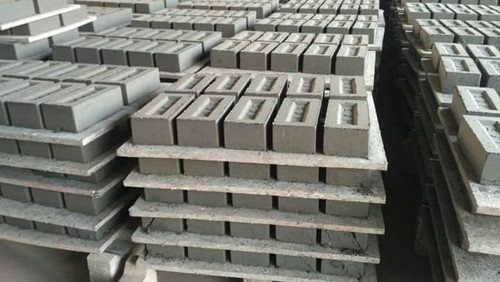
Fly ash bricks are manufactured using fly ash, water and binders such as cement or lime, often with sand, stone dust or gypsum, depending on the formulation. The mixture is moulded or pressed and cured to develop strength.
Well-manufactured fly ash bricks can offer uniform dimensions, good strength and controlled water absorption. However, their strength, density and durability depend on the raw materials, mix proportions and curing process; they are not automatically lighter or stronger than clay bricks. Soaking or pre-wetting requirements should follow the manufacturer’s recommendations and the applicable masonry specification. Refer to our detailed guide on masonry in construction.
Also, read: What are Refractory Bricks?
Concrete Bricks
Concrete bricks are manufactured from cement, aggregates and water, then moulded or pressed and cured. They are available in different dimensions, textures and colours, including pigmented finishes. They are used in walls, façades and boundary walls where their properties meet the design requirements. Mortar consumption depends on unit dimensions, dimensional accuracy and joint thickness.
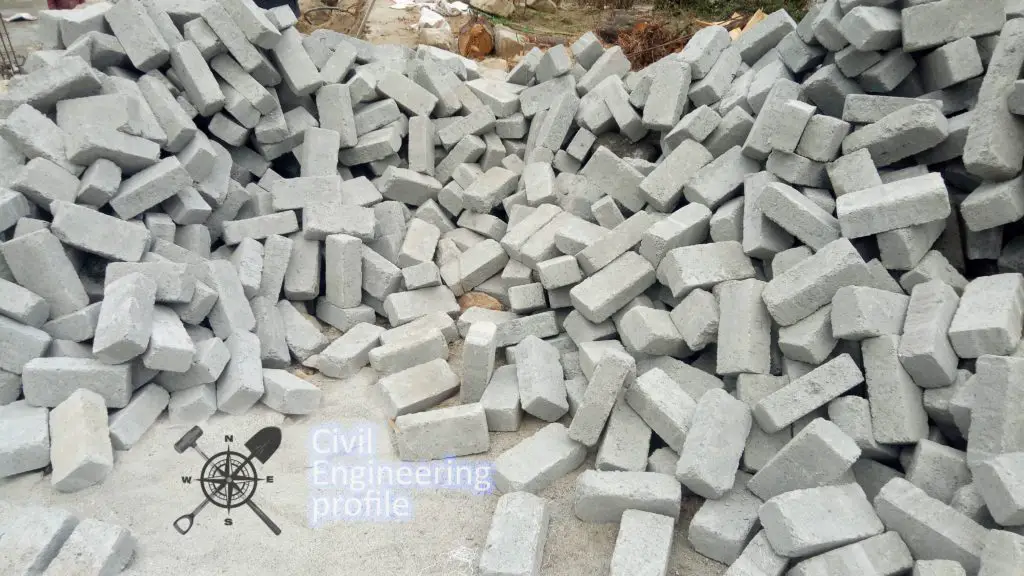
Sand Lime Bricks
Calcium silicate bricks are made of sand and lime and are popularly known as sand lime bricks. These bricks are used for several purposes in the construction industry, such as ornamental works in buildings, masonry works, etc.
Types Based on Properties and Intended Use
Bricks may also be classified according to their performance requirements and intended application. These categories can overlap: a fired clay brick, for example, may be manufactured as a facing brick, engineering brick or paving brick.
1. Common Bricks
Common building bricks are general-purpose masonry units selected mainly for satisfactory strength, durability and economy. Their appearance may be less consistent than that of facing bricks, particularly where the masonry will receive plaster, render or another finish.
Typical uses: Internal walls, partitions, backing masonry and plastered external walls. They may also be used in load-bearing construction when their properties satisfy the structural design requirements.
2. Engineering Bricks
Engineering bricks are dense masonry units, usually made from fired clay, manufactured to provide high compressive strength and low water absorption. They are selected primarily for their performance rather than decorative appearance.
Typical uses: Engineering bricks are used in specified below-ground masonry, retaining structures, inspection chambers and other locations requiring strength and resistance to moisture. Suitability for frost exposure, chemical exposure or damp-proof detailing must be confirmed from the product specification.
3. Facing Bricks
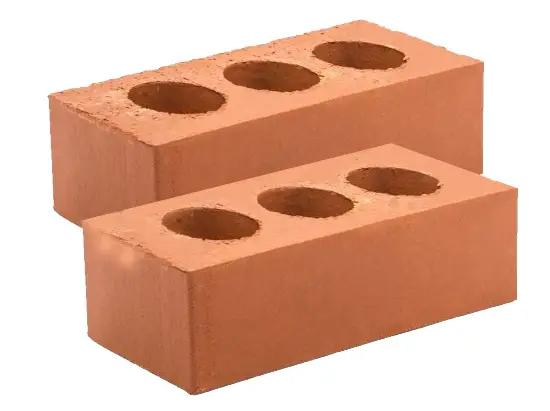
Facing bricks are manufactured for masonry surfaces that remain visible after construction. Their colour, texture, shape and dimensional consistency are important because the brickwork forms the finished architectural surface.
They are available in smooth, textured, wire-cut and other finishes, with colours depending on the raw materials, pigments and manufacturing process.
Typical uses: External façades, exposed internal walls, boundary walls, entrance features and decorative brickwork.
4. Refractory Bricks
Refractory bricks are specially manufactured to withstand elevated temperatures and the conditions associated with their intended thermal application. Depending on the product, their composition may include fireclay, alumina, silica or other refractory materials.
Different grades provide different resistance to heat, thermal cycling, abrasion and chemical attack. Dense refractory bricks and insulating refractory bricks serve different purposes and should not be treated as interchangeable. For more details, read our guide on refractory bricks: types, properties and uses.
Typical uses: Furnace and kiln linings, fireboxes, fireplaces and specified high-temperature portions of ovens and chimneys.
5. Paving Bricks
Paving bricks are manufactured for horizontal surfaces subjected to pedestrian movement or vehicle traffic. Depending on the product, they may be made from fired clay or concrete and are designed for suitable strength, wear resistance and durability.
Their dimensions, surface finish and thickness should suit the intended paving system and loading.
Typical uses: Footpaths, courtyards, patios, landscaping areas and driveways. Vehicle-trafficked areas require products specifically suitable for the expected loads.
Comparison of Bricks by Properties and Intended Use
| Type | Main selection consideration | Typical applications |
|---|---|---|
| Engineering bricks | Strength and low water absorption | Specified below-ground and demanding masonry |
| Facing bricks | Appearance and exposure durability | Visible façades and architectural brickwork |
| Common building bricks | General masonry performance and economy | Plastered walls, partitions and backing masonry |
| Refractory bricks | Suitability for elevated temperatures | Furnaces, kilns, fireboxes and ovens |
| Paving bricks | Wear resistance and suitability for traffic | Paths, patios, courtyards and driveways |
Types of Burnt Clay Bricks Based on Quality
Burnt clay bricks are traditionally classified as first-, second-, third- and fourth-class bricks according to their physical characteristics and degree of burning. This descriptive classification is commonly used in building-materials textbooks
1. First Class Bricks
First-class bricks are thoroughly burnt and generally have a deep red, cherry or copper colour. They have a regular rectangular shape, smooth faces, straight, sharp edges, square corners and uniform texture. They should be free from cracks, flaws and stones, and their fractured surfaces should not contain lime lumps. Their dimensions should conform to the applicable standard or project specification.
A fingernail should not readily scratch the surface, and two bricks struck together should produce a clear ringing sound. These are preliminary field checks rather than substitutes for laboratory testing.
According to S. K. Duggal’s Building Materials, first-class bricks have water absorption of approximately 12–15% of their dry weight after 24 hours of immersion in cold water. This is a traditional textbook description; specification and acceptance should follow the applicable standard’s requirements for compressive strength, water absorption and efflorescence.

Typical uses: Exposed and pointed brickwork, architectural masonry and other permanent masonry where good appearance and dimensional consistency are required.
2. Second Class Bricks
Second-class bricks are well-burnt clay bricks with minor irregularities in shape and surface finish. S. K. Duggal’s Building Materials describes them as generally meeting the requirements for first-class bricks, but allowing small cracks and distortions. The textbook gives water absorption of approximately 16–20% of dry weight and a minimum crushing strength of 7.0 N/mm² (Duggal, 2008).
These values belong to the traditional textbook classification. Acceptance must follow the applicable standard and project specification, which may impose stricter limits on cracks, distortion and other defects.
Typical uses: Plastered internal and external walls, partitions, boundary walls and concealed masonry, provided the bricks meet the design requirements. Plaster improves appearance but does not compensate for inadequate strength, poor durability or significant defects.

3. Third Class Bricks
Third-class bricks are underburnt clay bricks that are relatively soft and light-coloured. According to S. K. Duggal’s Building Materials, they produce a dull sound when struck against each other and have water absorption of approximately 25% of their dry weight (Duggal, 2008). These bricks have low crushing strength.
Typical uses: Temporary structures, as described in the textbook. Their suitability should be assessed against the project requirements, particularly where moisture exposure is expected.

4. Fourth Class Bricks
Fourth-class bricks are overburnt bricks that are typically dark in colour and irregular or distorted in shape, making them unsuitable for regular brick masonry. When crushed, they may be used in selected filling, roadwork or non-structural applications, subject to project specifications. Their use as concrete aggregate requires testing and approval to confirm that they meet the requirements for the intended application.
Typical uses: Selected filling, roadwork or other approved applications using crushed material, subject to testing and project specifications.
Comparison of Burnt Clay Bricks by Traditional Quality Class
| Class | Typical characteristics | Application guidance |
|---|---|---|
| First-class | Well-burnt; regular shape; clean edges and finish | Exposed or general masonry meeting specified requirements |
| Second-class | Minor irregularities in shape and finish | Plastered or concealed masonry meeting specified requirements |
| Third-class | Underburnt; relatively soft; higher absorption | Limited temporary applications |
| Fourth-class | Overburnt; distorted; potentially brittle | Approved reuse as crushed material |
Also, read: Comparison Between AAC and Fly Ash Blocks: 10 Points of Comparison
Frequently Asked Questions:
Q: Which class of brick is good for house construction?
First-class burnt clay bricks are generally preferred for their uniform shape, sound quality and clean finish, especially in exposed brickwork. Second-class bricks may be suitable for plastered masonry if they meet the specified strength, water absorption and durability requirements. Selection should follow the building design and applicable specifications, rather than the traditional class label alone.
Q: What are the classes of the bricks?
Burnt clay bricks are traditionally divided into four quality classes:
1. First-class bricks
2. Second-class bricks
3. Third-class bricks
4. Fourth-class bricks
Q: What are clay bricks?
Clay bricks are masonry units made from clay or an earth mixture. They may be sun-dried without kiln firing or fired in a kiln. Their strength, moisture resistance and suitable applications depend on their composition and manufacturing process.
Q: What are engineering bricks?
Engineering bricks are usually fired clay bricks manufactured for high compressive strength and low water absorption. They are used in demanding masonry applications where their specified properties meet the design requirements. Resistance to frost or chemicals must be confirmed for the particular product.
References & Standards
- Duggal, S. K. (2008). Building Materials. New Age International (P) Ltd., Publishers
- Punmia, B. C., Jain, A. K., & Jain, A. K. (1993). Building construction (5th ed.). Laxmi Publications.
- Bhavikatti, S. S. (2010). Basic civil engineering. New Age International (P) Limited, Publishers.
- Dwivedi, P., & Bajpai, P. (2018). Handbook of Civil Engineering. CL Media (P) Ltd.
- Bureau of Indian Standards. (1992). Common burnt clay building bricks – Specification (IS 1077: 1992)(Fifth Revision). Bureau of Indian Standards.


